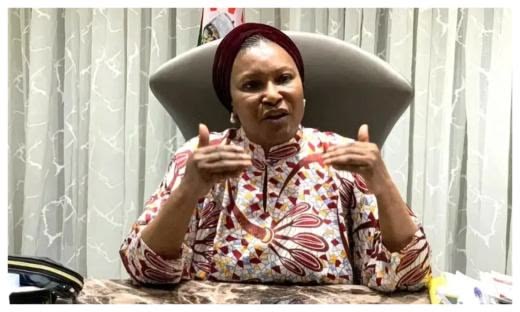
The Nigerian Senate has dismissed Senator Ireti Kingibe’s 25% income tax claim, saying the Nigeria Tax Act does not impose a flat 25 per cent tax on every Nigerian’s earnings.
Senator Yemi Adaramodu, Chairman of the Senate Committee on Media and Public Affairs, said the National Assembly had passed the tax legislation. President Bola Tinubu also assented to the law. Adaramodu urged Nigerians to rely on the provisions of the enacted legislation. He spoke in an interview with Sunday PUNCH.
Kingibe, who represents the Federal Capital Territory (FCT), made the claim in a widely shared video. She warned residents against voting for the All Progressives Congress (APC) in the 2027 general elections. She alleged that the government would impose a 25 per cent tax on Nigerians’ earnings if the party retained power.
The 25% income tax claim has drawn attention as Kingibe seeks re-election to the Senate under the African Democratic Congress (ADC). In the video, she criticised rising electricity costs and other government policies. She also urged residents to reject the APC at the polls.
Kingibe claimed that the National Assembly had passed the tax provision but that the government was delaying its implementation until after the elections. However, the Senate’s response and published fact-checks challenge her interpretation of the law.
According to the Nigeria Tax Act, 2025, the country operates a progressive personal income tax system. This means different portions of taxable income attract different rates.
The law sets the tax rate at zero per cent on the first ₦800,000 of annual taxable income. Other income brackets attract rates of 15, 18, 21 and 23 per cent. The highest rate of 25 per cent applies only to the portion of annual taxable income above ₦50 million.
The new tax framework took effect on January 1, 2026. This contradicts the suggestion that its implementation would begin only after the 2027 elections.
Adaramodu also said lawmakers who disagree with the legislation could seek a review through the appropriate legislative channels.
The controversy comes as political parties prepare for the 2027 general elections. Taxation, electricity costs and the rising cost of living remain key issues in Nigeria’s political debate.


